
English| EUR
Suggested for you
More currencies
Choose a language
Copenhagen's reputation as an expensive city doesn't mean every meal has to drain your wallet. With free-entry food markets, budget-friendly Danish staples, and neighborhoods where locals eat, you can keep daily costs reasonable without sacrificing quality or variety.
Quick answer
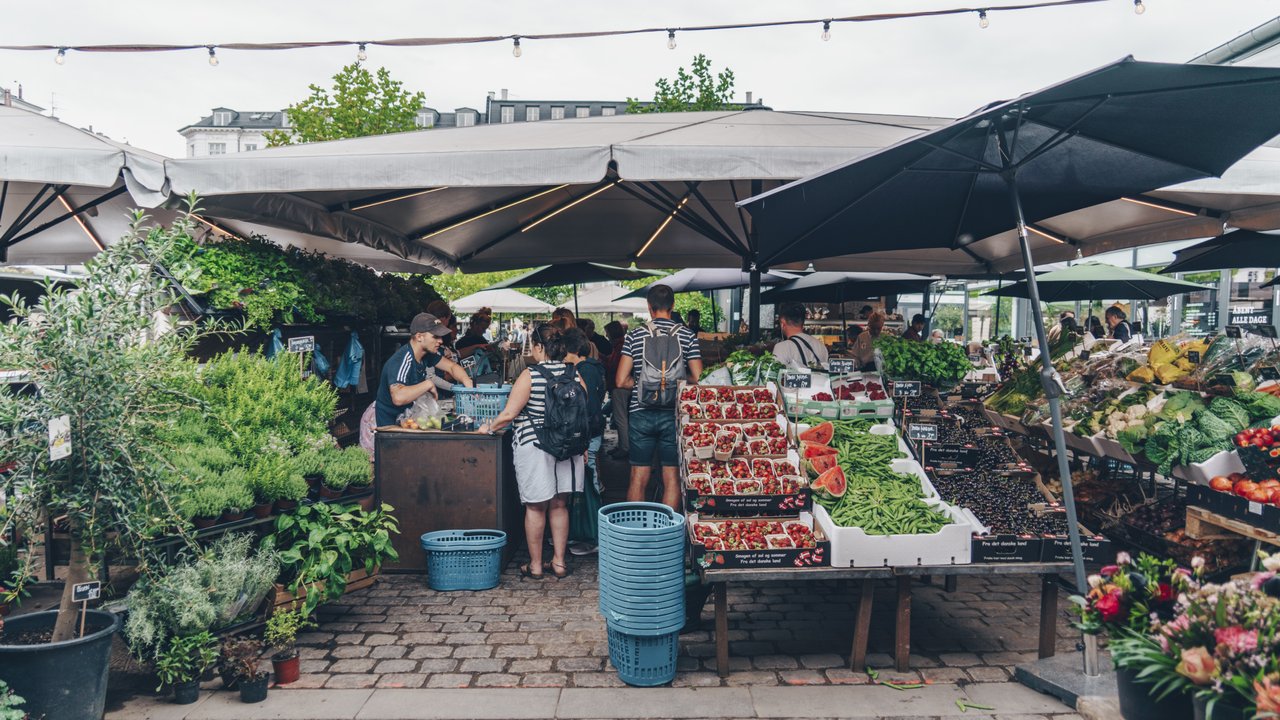
Eating in Copenhagen on a budget centers on Torvehallerne, the city's covered food market at Frederiksborggade 21 with free entry and open Monday to Friday 10:00–19:00, Saturday 10:00–18:00, and Sunday 10:00–18:00. Individual stalls sell smørrebrød, pastries, and hot meals starting around 50 DKK, while grocery vendors offer cheese, bread, and produce at lower prices than tourist-district restaurants.
Torvehallerne opened in 2011 on the site of a former flea market and quickly became the central hub for affordable eating in Copenhagen without the white-tablecloth prices of Nyhavn or Strøget. The twin glass-roofed halls shelter sixty vendors selling everything from organic vegetables to Middle Eastern flatbreads, and entry costs nothing. You pay only for what you choose to eat or take away. The market's layout rewards selective shopping. One hall focuses on raw ingredients—fishmongers, butchers, bakeries—while the other clusters prepared-food stalls where you can assemble a full meal for under 100 DKK. A rye-bread smørrebrød with pickled herring runs 55 to 70 DKK, a third of what sit-down restaurants in Indre By charge for the same open-faced sandwich. Coffee from one of the roastery stalls costs 35 to 45 DKK, and pastry counters sell kanelsnegle and tebirkes for 25 to 35 DKK each. Locals treat Torvehallerne as a hybrid: part weekly grocery run, part lunch destination, part Sunday browsing ritual. Budget dining in Copenhagen on a practical level means knowing which meal to eat where. Danish breakfast culture leans toward rye bread, cheese, and cold cuts, all of which you can buy at Torvehallerne's grocery vendors and prepare in a hostel or rental kitchen for a fraction of café prices. Lunch is the main hot meal of the day, and the market's prepared-food stalls serve substantial portions—Vietnamese bánh mì, Italian porchetta sandwiches, Greek souvlaki—that carry you through the afternoon. Dinner can be lighter: a pastry and coffee, or ingredients from the market cooked at your accommodation. Arriving before 11:30 on weekdays gives you first access to the day's baked goods and the shortest queues at popular stalls. Weekends draw larger crowds, especially Saturday afternoon, when the market becomes a social gathering point. The phone line +45 70 10 60 70 handles vendor inquiries, though most stalls operate on a walk-up basis with no reservations. The official site torvehallernekbh.dk lists current vendors and occasional closures, though the market itself maintains consistent hours year-round with few exceptions for public holidays.
“Torvehallerne operates as a hybrid: part weekly grocery run, part lunch destination, part Sunday browsing ritual.”
Dining in Copenhagen requires balancing high-quality market experiences with self-catering to manage daily expenses effectively. A strategic approach helps visitors enjoy local flavors without exceeding their financial goals.
How to spend less
Verdict: Expect to spend between 400 DKK and 600 DKK per person daily for a comfortable, budget-conscious dining experience.
Copenhagen offers a diverse range of dining options that balance quality with affordability. By choosing local markets and street-focused eateries, visitors can manage food costs while experiencing the city's culinary landscape.
market
Located at Frederiksborggade 21, 1362 København, this venue features numerous stalls offering diverse prepared foods and fresh produce. It serves as a central hub for those seeking variety and quality in a single location.
street
This bridge near the city center becomes a popular gathering spot where locals enjoy affordable takeaway snacks and drinks. It provides an informal atmosphere and serves as a practical alternative to sit-down restaurants.
street
Located in the Refshaleøen area, this outdoor food street market consists of containers offering international dishes. It is a favored choice for casual, lower-cost dining with views of the harbor.
picnic
These common supermarket chains are located throughout the city and provide accessible options for assembling high-quality meals. Purchasing items here is a reliable strategy for keeping food expenditures low during a visit.
Torvehallerne is open daily to provide a variety of affordable meal options for visitors. The market operates with consistent hours during the week and slightly shorter hours on weekends.
To enjoy Copenhagen's food scene while managing your budget, the best arrival window is 10:00–11:30. Arriving during this period allows you to secure seating and avoid the peak lunch queues.
—
This is the quietest time to explore food stalls and find seating without rushing.
—
Popular spots experience high demand, making it difficult to find table space during these hours.
Mild (12°C–18°C)
Extended daylight hours provide more time to walk between affordable eateries.
Cool (8°C–14°C)
Fewer tourists visit during these months, often resulting in shorter wait times at food halls.
Verdict: The best time to visit is on a weekday between 10:00 and 11:30, ideally during the shoulder months of May or October.
Everything you need to know about eating in copenhagen on a budget
Yes, finding affordable meals is manageable by visiting local food halls and street food vendors. Focus on casual dining options to keep your daily expenses low while still enjoying quality Danish flavors.
Look for smørrebrød stalls, bakeries, and international food markets which offer substantial portions at lower prices. These spots are popular for those focused on eating in copenhagen on a budget.
You can enjoy high-quality local produce and prepared meals at Torvehallerne without an entrance fee, as you only pay for what you consume at individual stalls. Arriving early helps secure a table during peak hours.
While food prices are generally transparent, consider that tap water is free and high quality, so avoid paying for bottled water to save money. Always check if service is included in the bill, though tipping is not mandatory.
Preparing your own meals using ingredients from grocery stores or fresh markets is the most cost-effective method. However, balancing this with occasional affordable street food allows you to experience the local culinary scene without overspending.
Copenhagen offers diverse price points, and while the city is known for being expensive, careful planning makes it comparable to other capitals. Utilizing free attractions and budget-friendly food hubs is key to successful travel.
What Food Is Copenhagen Known For
Read more Tickets & toursBest Rated Copenhagen Food Tours
Read more Tickets & toursCopenhagen Private Food Tours
Read more Tickets & toursCopenhagen Food Tours With Kids
Read more Tickets & toursCopenhagen Food Bike Tours
Read more Tickets & toursCopenhagen Boat Tour With Food
Read more Tickets & toursCopenhagen Pastry Food Tours
Read more